Wedding Trends: The Essential Floral Colour Palettes of Recent Years
From bouquet to centrepieces
The colour palette is one of the most powerful elements in a wedding's floral design. It sets the tone, creates an atmosphere and harmonises all the visual details — from the bouquet to the centrepieces, the chairs to the ribbons. Here are the palettes that have defined recent years and those that continue to lead in 2026.
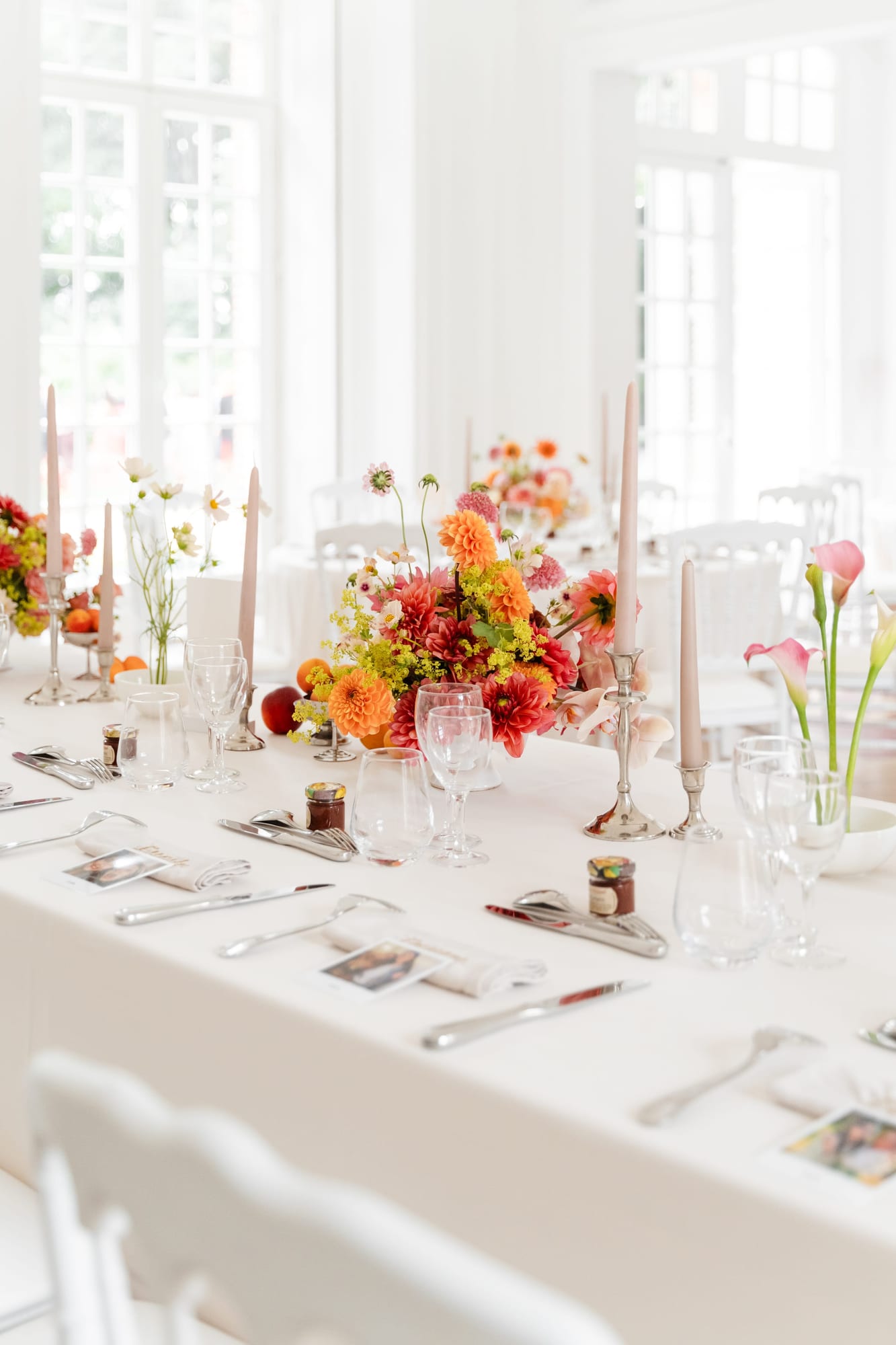
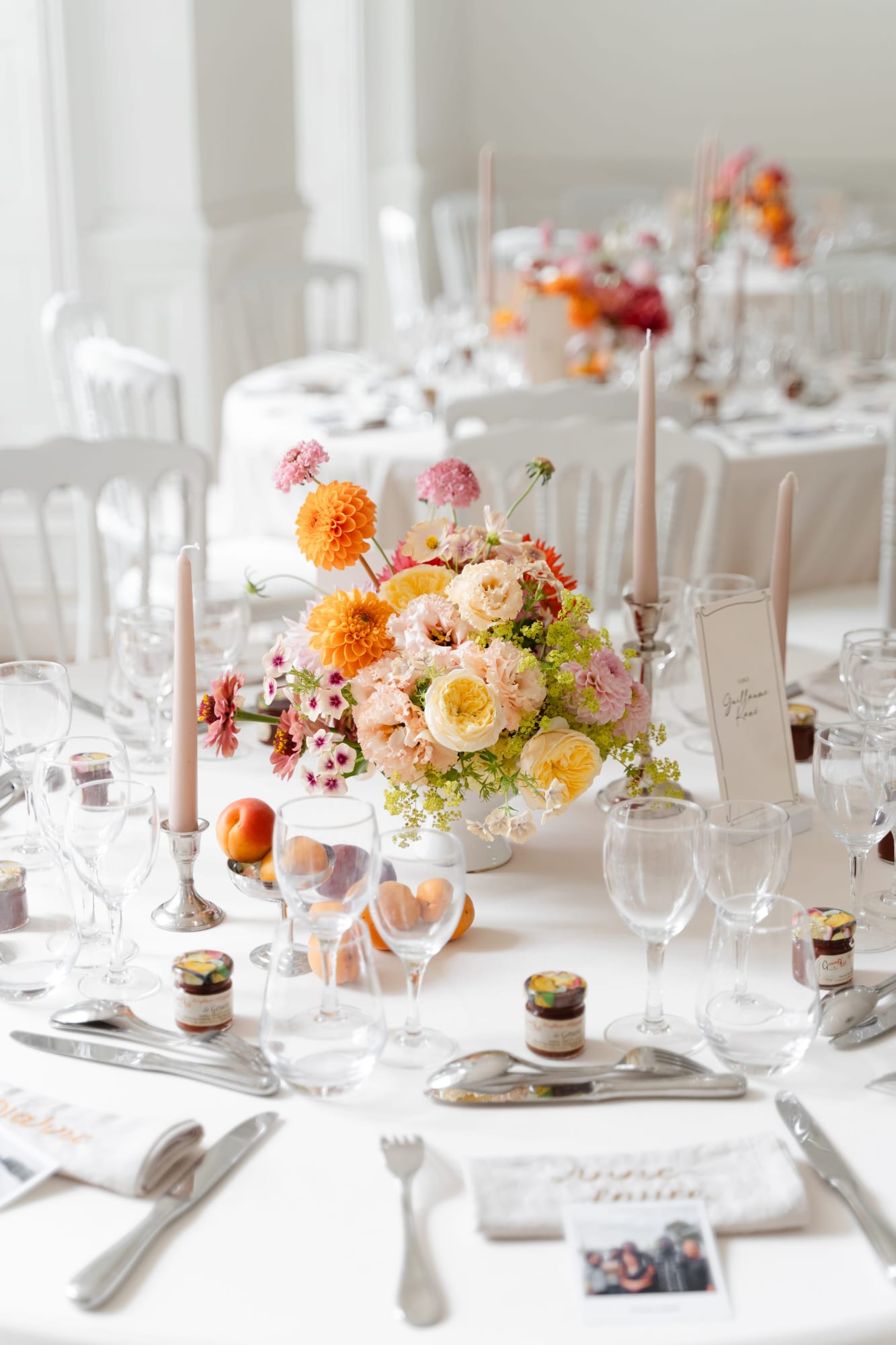
Fuchsia & orange — energy, modernity, visual impact
Bold and vibrant, the fuchsia & orange palette has been one of the great trends in creative weddings in recent years.
It creates a sunny, festive and ultra-photogenic atmosphere. Ideal for summer weddings or those who dare to go in a strong direction.
- Fuchsia dahlias
- Coral roses
- Orange lilies
- Touches of saffron yellow
- Deep green foliage
This palette makes a lasting impression and works particularly well with rich fabrics (velvet, satin) or metallic accents.
Sage green — organic softness and natural elegance
The sage green palette has established itself as a staple for elegant, soft bohemian and natural weddings.
It is a neutral, sophisticated and calming colour that pairs perfectly with fresh flowers, lush foliage and refined textiles.
- Sage green + pure white
- Sage green + cream
- Sage green + champagne
- Sage green + blush touches
Sage green remains one of the most enduring palettes in high-end weddings because it works in every season.
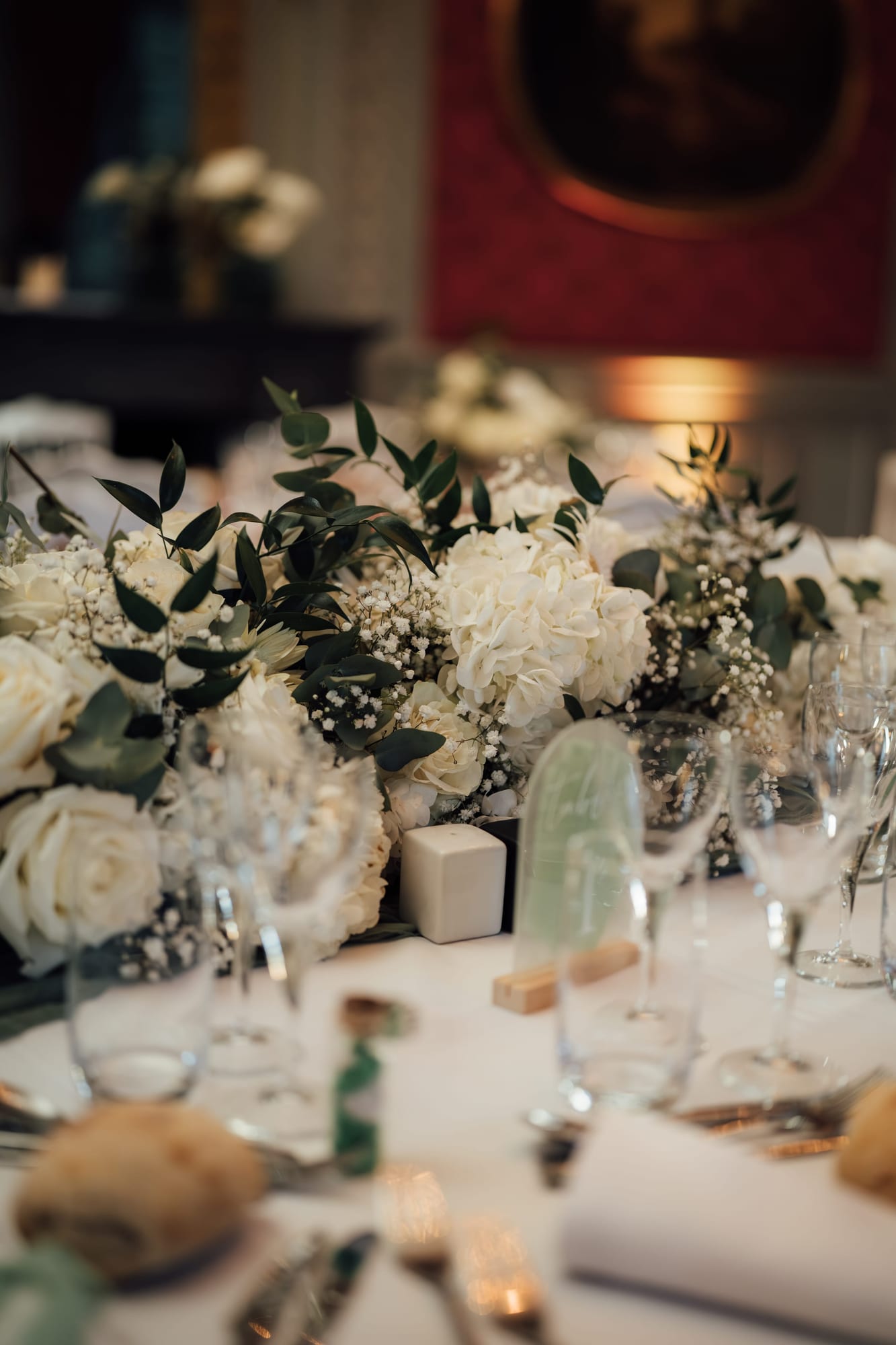
Navy blue & burgundy — depth and timeless sophistication
The navy blue & burgundy duo combines depth, elegance and visual intensity.
It is a particularly powerful palette in autumn/winter, but can also be used in summer for a very structured, editorial aesthetic.
- Burgundy roses
- Navy anemones or deep blue tones
- Touches of plum
- Dark foliage
- Metallic accents (gold, copper)
This palette evokes nobility, intensity and sophistication.
Green & burgundy — warm, modern contrast
The deep green & burgundy combination is growing strongly in 2026.
It brings an elegant warmth without being too contrasted. It is a palette that works across many styles: classic-contemporary, structured romantic, nature chic.
- Deep burgundy (roses, dahlias)
- Emerald or deep green
- Touches of beige or champagne
- Contrasting foliage
The combination creates a sense of organic richness: luxurious without being ostentatious.
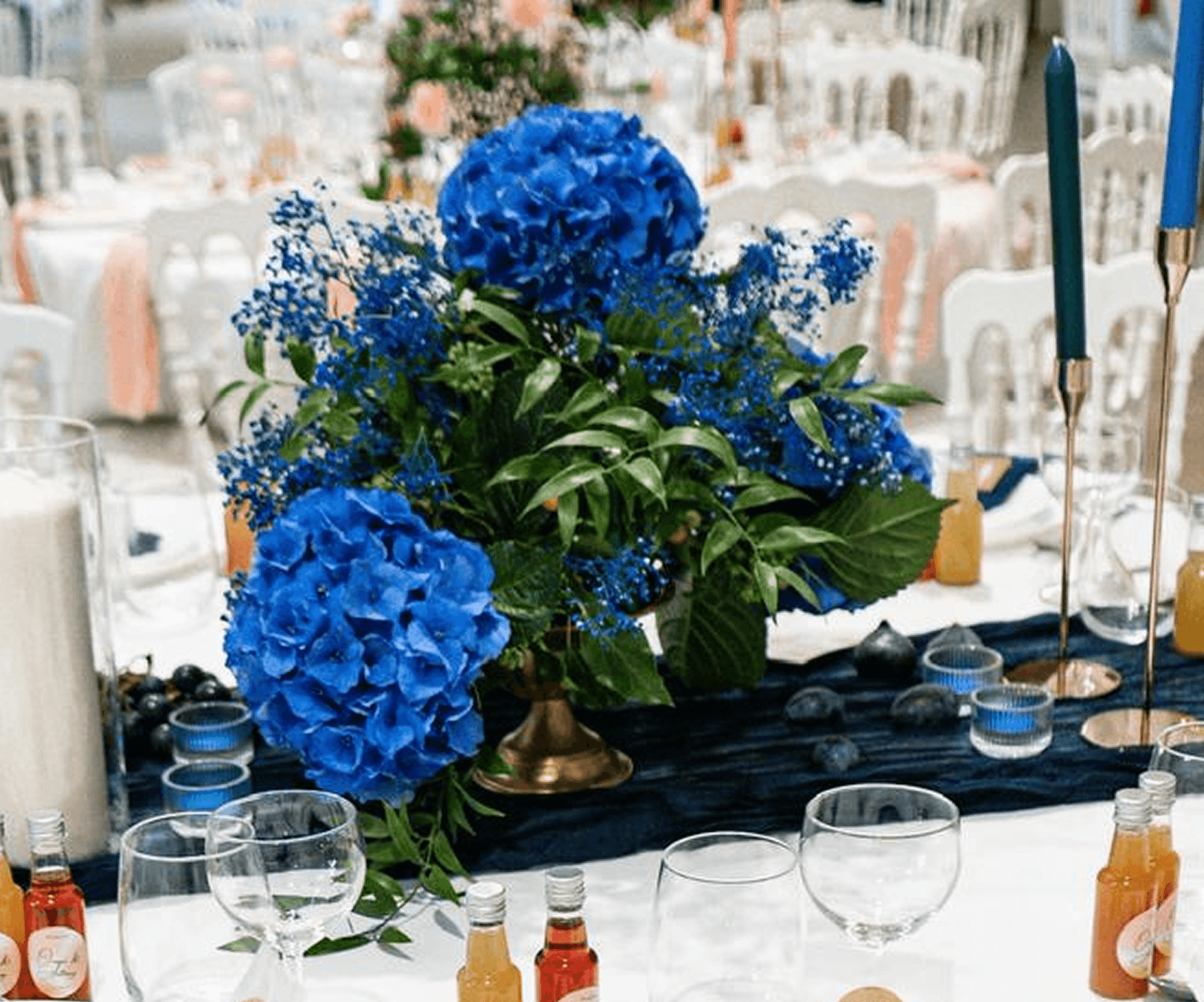
Terracotta & olive — soft elegance and organic palette
A strong trend over recent years and still going in 2026, the terracotta & olive palette is ideal for a bohemian chic wedding or nature-inspired décor.
- Antique roses in terracotta tones
- Light brown
- Soft olive and greenish tones
- Cream accents
This palette is perfect for nature chic weddings or those inspired by Mediterranean landscapes.
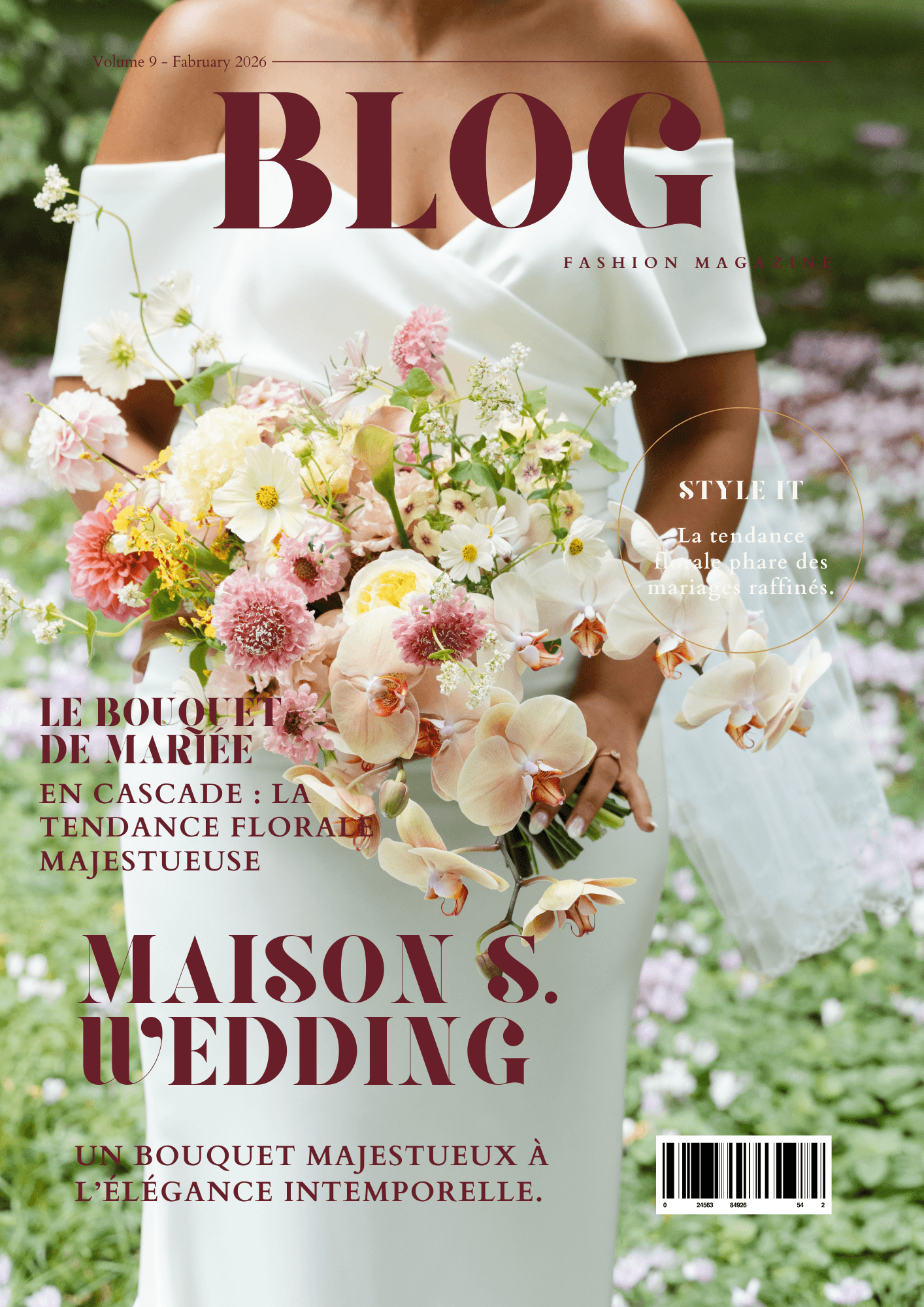
Nude pink & countryside — subtle romanticism and luminosity
Softer than the others, this palette remains very popular because it creates light and delicacy.
- Nude pink
- Cream
- Soft green
- Very pale peach touches
It works particularly well in historic châteaux, countryside estates or refined bohemian weddings.
In summary
Choosing your floral palette means defining the visual identity of your wedding.
- ✔Consider the season for coherent tones
- ✔Harmonise with the dress, venue and stationery
- ✔Create aesthetic cohesion from the bouquet to the centrepieces
- ✔Think about textures to reinforce visual impact
Because a well-chosen palette doesn't just decorate.
It tells a story.